Evaluating Stacked Hearts 3D Valentine Decor for Custom Crafting Projects
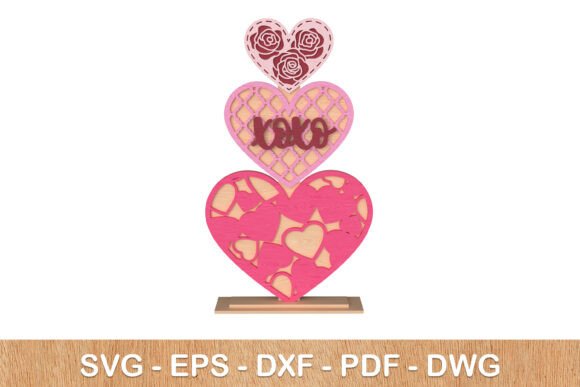
When approaching the creation of personalized Valentine’s Day decorations, crafters and designers often face a critical decision: whether to purchase pre-made physical items or invest in digital assets that allow for full customization. The Stacked Hearts 3D Valentine Decor represents a specific category of digital design resources that bridges the gap between simple flat graphics and complex structural engineering. Understanding what this product entails, its technical specifications, and how it compares to other crafting methods is essential for making an informed purchasing decision.
This analysis explores the utility of the included file formats—SVG, DXF, EPS, PDF, and DWG—and evaluates how these assets fit into various creative workflows. By examining the strengths, limitations, and ideal use cases, readers can determine if this resource aligns with their specific project goals, whether they are creating home decor, textiles, or commercial packaging.
Understanding the Product: What Is Included?
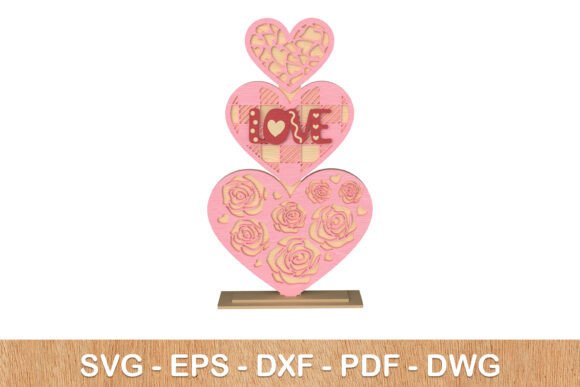
The core value proposition of the Stacked Hearts 3D Valentine Decor package lies in its versatility across multiple file formats. A zip folder containing designs in SVG, DXF, EPS, PDF, and DWG formats offers significant flexibility for different types of machinery and software environments. Each format serves a distinct purpose in the production pipeline, and understanding these distinctions is crucial for optimal results.
- SVG (Scalable Vector Graphics): This is the industry standard for laser cutters and vinyl plotters. SVG files retain crisp edges at any scale, making them ideal for intricate heart stacking patterns. They are easily editable in vector software like Adobe Illustrator or Inkscape, allowing users to adjust dimensions without losing quality.
- DXF (Drawing Exchange Format): Widely used in CAD (Computer-Aided Design) applications and industrial laser cutting machines. If you are using professional-grade equipment such as a Glowforge Pro or a Trotec laser, DXF files ensure precise compatibility with machine software.
- EPS (Encapsulated PostScript): Often preferred by graphic designers for print production. EPS files support high-resolution vectors and are suitable for sending to professional printers who need to create large-scale banners or signage featuring the stacked heart motif.
- PDF (Portable Document Format): While primarily a viewing format, PDFs included in design packs often contain vector data that can be imported into cutting software. They are useful for quick visualization and manual tracing if vector editing tools are unavailable.
- DWG (Drawing Window Format): Native to AutoCAD and similar architectural software. This format is beneficial for users who require precise dimensional control or plan to integrate the decor into larger structural designs, such as custom shelving or room dividers.
The inclusion of all these formats means the purchaser is not locked into a single workflow. Whether you are a hobbyist with a Cricut machine or a professional designer working with industrial lasers, the Stacked Hearts 3D Valentine Decor provides the necessary digital blueprints to execute the vision.
Comparing Digital Assets to Physical Pre-Made Decor
One of the primary considerations for buyers is comparing digital downloadables against ready-to-hang physical decor. Both options have distinct advantages depending on the user’s timeline, budget, and desire for personalization.
Customization and Scale
Physical decor items come in fixed sizes and materials. You might find a wooden heart stacker in a specific stain, but you cannot easily change the color or dimensions without painting or modifying the item. In contrast, digital files allow for infinite scalability. Using the Stacked Hearts 3D Valentine Decor files, a user can resize the design from a small desk ornament to a large wall installation. Furthermore, material choice is entirely up to the creator. One might choose acrylic for a modern look, wood for rustic charm, or even cardstock for temporary event decor.
Cost Efficiency for Bulk Production
If the goal is to produce multiple units—for example, selling at a local craft fair or gifting to a large group—digital assets offer superior cost efficiency. A single purchase allows for unlimited prints and cuts. Physical items require per-unit pricing, which includes shipping costs and manufacturer markup. For those exploring alternatives in terms of budget management, the one-time investment in the digital pack reduces long-term expenses significantly.
Time and Skill Requirements
However, digital assets require time and technical skill. Cutting, assembling, and finishing a 3D stacked heart design takes considerably longer than unpacking a pre-made item. Users must account for machine setup time, material preparation, and assembly glue drying times. If speed is the primary factor, physical decor may be preferable. But if the process of creation is part of the enjoyment, or if the final product needs to be unique, the digital route is more rewarding.
Exploring Application Versatility
The term "Valentine Decor" often conjures images of red paper hearts, but the application scope of the Stacked Hearts 3D Valentine Decor files extends far beyond traditional holiday themes. The geometric nature of stacked layers lends itself to various aesthetic styles and functional uses.
Home Decor and Interior Design
In the realm of home decor, these designs can serve as standalone art pieces. When cut from medium-density fiberboard (MDF) or plywood, the stacked hearts add texture and depth to shelves or mantels. The 3D aspect creates shadows and highlights that change throughout the day, adding dynamic visual interest. Unlike flat canvas prints, the physical depth of the stacked design interacts with light, offering a tactile experience that enhances the living space.
Stationery and Paper Crafts
For those interested in stationery, the SVG and PDF files are particularly useful. Users can create layered greeting cards where the "stacked" effect is achieved through die-cutting or folding techniques. The precision of the vector lines ensures that layers align perfectly, resulting in a professional finish. This approach is also applicable to scrapbooking, where the 3D element adds a focal point to memory layouts.
Textiles and Fashion Prints
The versatility of the EPS and SVG formats allows for integration into textile design. The stacked heart pattern can be repeated to create fabric prints for fashionable clothes, scarves, or tote bags. Because the design is vector-based, it scales cleanly across yardage without pixelation. This makes it a viable option for small-batch clothing manufacturers looking for unique, thematic prints for Valentine’s collections.
Packaging and Branding
Businesses selling gifts, chocolates, or cosmetics can utilize these designs for custom packaging. The 3D structure can be adapted into box inserts or hang tags. The clean lines of the stacked hearts provide a modern, minimalist aesthetic that appeals to contemporary consumers. Using the DWG format, designers can precisely map out die-lines for packaging production, ensuring that the decorative elements align with the structural integrity of the box.
Decision Factors: When to Choose This Resource
Selecting the right tool for a project involves evaluating specific constraints and objectives. Here are key factors to consider when deciding if the Stacked Hearts 3D Valentine Decor is the right fit.
Equipment Availability
Do you own or have access to a cutting machine? If you rely solely on hand-cutting with scissors, the complexity of the internal cuts required for a true 3D stack may be challenging. However, if you have a laser cutter, CNC router, or electronic cutting machine (like Silhouette or Cricut), these files are optimized for such tools. The variety of formats ensures compatibility with most common cutting software.
Design Experience Level
While the files are ready to use, achieving a high-quality 3D result requires some understanding of assembly. Beginners may find the process educational but time-consuming. Intermediate users will likely appreciate the balance of creativity and technical challenge. Advanced users can modify the layer spacing or colors to create entirely new variations, leveraging the open nature of the vector files.
Project Goals
If the goal is rapid production with minimal effort, pre-made items are better. If the goal is to create a bespoke, high-quality item that reflects personal taste or brand identity, digital assets are superior. The ability to choose materials—such as sustainable bamboo or recycled acrylic—adds an ethical dimension to the project that mass-produced items often lack.
Limitations and Considerations
No solution is without drawbacks. It is important to acknowledge the limitations of digital design files. First, there is no physical preview before cutting. Users must rely on their imagination or mockups to visualize the final product. Second, material waste can occur during the cutting process, especially with nested designs. Proper planning and nesting software can mitigate this, but it remains a factor in cost calculations.
Additionally, the "3D" aspect relies on the user’s assembly skills. Misalignment during gluing can compromise the structural integrity and aesthetic appeal of the finished piece. Therefore, patience and attention to detail are required. For those seeking instant gratification, this process may feel tedious. However, for those who value craftsmanship, these steps are integral to the final outcome.
Conclusion
The Stacked Hearts 3D Valentine Decor package offers a robust set of tools for creators willing to engage in the production process. Its strength lies in its multi-format compatibility, allowing seamless transition from design to production across various industries. From home decor enthusiasts to professional designers, the asset supports a wide range of applications including textiles, stationery, and packaging.
While it requires time, skill, and appropriate equipment, the reward is a customizable, scalable, and cost-effective solution for Valentine’s themed projects. By carefully weighing the tradeoffs between convenience and customization, users can determine if this digital resource aligns with their creative needs. Ultimately, the choice depends on whether the priority is immediate availability or the freedom to create something uniquely tailored.